Saturday, 14 November 2009

Southeast Asian Ceramics: New Light On Old Pottery

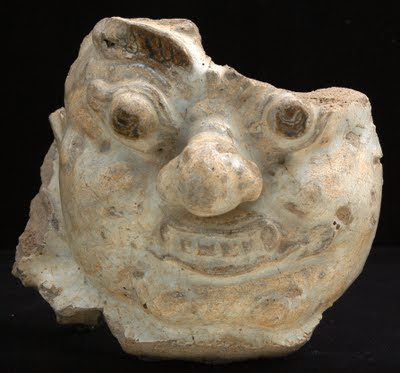
 [Fragment from a guardian figure, Southeast Asian Ceramics: NEW LIGHT ON OLD POTTERY, NUS Museum, 2009]
click on the above image to view gallery views

Date: 14 November - 25 July 2009
Venue: NUS MUSEUM


This exhibition features ceramics produced in Southeast Asian Kilns from as early 11th century.Research in ceramics over the past decades has uncovered a wealth of data about the centers of productions, characteristics of wares from various kilns and active time frames of the sites.

Our knowledge about the consumption trends of Southeast Asian ceramics has also been enhanced through both finds from land and maritime archeology. Employed in concert with written sources, such archeological data has been crucial in reconstructing the region’s pre-modern socio economic and cultural history and providing a more through picture of site usage patterns and intra-regional interactions.


Curator: Foo Su Ling
Guest Curator: Prof John Miksic

Friday, 6 November 2009

Invisible life: Flip-Flops Journeys Perspectives


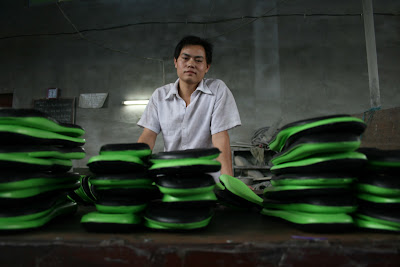
[Micheal Tan, Chinese worker at Flip-flop Factory in Fuzhou, China]
click on the above image to view gallery shots

An Art-Sociology Investigation
Michael Tan in collaboration with Caroline Knowles

Date: 6 November 2009 to 21 March 2010
Venue: NUS MUSEUM

Presenting the outcomes of a dialogue between artist, Michael Tan and sociologist, Caroline Knowles on the world's most popular and best selling foot ware – Flip-Flops, this exhibition presents an object biography of a single flip-flop as a vantage point in studying the landscapes, peoples and processes entangled with it. Made from plastic or rubber, flip-flops, commonly known as ‘slippers’, sandals, etc. are easily recognized by their signature Y-shape straps that are usually attached to the sole. Penetrating beyond everyday utilitarian facets of the flip-flop, Michael and Caroline navigate through China and Ethiopia to animate the life-worlds of a single pair of flip-flop that may otherwise become downplayed by the economics of matter. All the while, a larger question looms - what can we learn about the social world by studying its most taken-for-granted objects?  

Curator: Ahmad Mashadi, Shabbir Hussain Mustafa